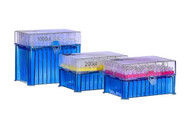
Choosing the right pipette tip involves more than finding one that fits your pipette. Your application, sample type, contamination requirements, and laboratory workflow can all influence which tip is appropriate.
Start with pipette compatibility
A secure fit between the pipette and tip is essential for reliable liquid handling. Before selecting a tip, confirm that it is compatible with the pipette models used in your lab.
Universal-fit tips can simplify purchasing in labs that use pipettes from multiple manufacturers, while manufacturer-specific options may be appropriate for specialized applications.
Consider your application
Different workflows place different demands on pipette tips. Consider the volume range you routinely work with and whether your application requires additional protection against contamination.
Common options include:
- Standard pipette tips for routine liquid handling
- Filtered tips for applications where contamination control is important
- Sterile tips for workflows requiring sterile consumables
- Low-retention tips for samples that may adhere to conventional polypropylene surfaces
Think about packaging and workflow
Packaging can have a significant impact on laboratory efficiency. Racked tips provide convenient access at the bench, while refill systems can help reduce packaging waste and storage requirements.
Labs with high pipette-tip consumption should also consider how frequently racks need to be replenished and whether bulk or refill packaging better supports their workflow.
Finding the right fit
Pipette tip selection ultimately depends on the pipettes, applications, and workflows in your laboratory. Evaluating these factors together can help you choose a tip that supports both reliable pipetting and efficient day-to-day work.